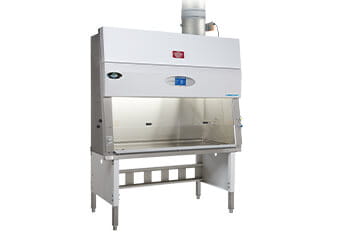
Use of Natural Gas or Bunsen Burner within a Biosafety Cabinet
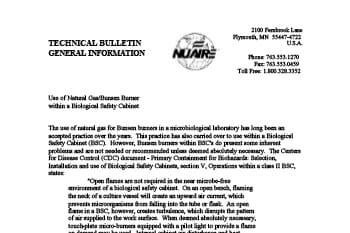
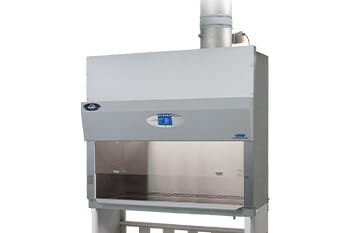
Using natural gas for Bunsen burners in microbiological laboratories has been a longstanding practice. However, within Biological Safety Cabinets (BSCs), this practice can pose safety hazards and disrupt the airflow necessary for maintaining a sterile environment. According to the CDC, open flames are generally unnecessary in BSCs and can create turbulence. If natural gas is deemed necessary, touch-plate micro-burners with a pilot light are recommended to minimize air disturbance and heat buildup. Proper safety measures must be observed, including installing an emergency gas shutoff valve outside the BSC. NuAire advises against using natural gas in BSCs but provides guidelines and certified components if needed.
Use of Natural Gas or Bunsen Burner within a Biosafety Cabinet

Related Resources
White Paper
Standard Operating Procedures (SOPs) for Biosafety Cabinet Use
Learn why and how to create standard operating procedures (SOPs) for biosafety cabinet use to improve lab safety, compliance, and workflow consistency. Download the full guide today.
White Paper
Surface Decontamination in a Biosafety Cabinet
Learn the right techniques for surface decontamination in a biosafety cabinet. Protect personnel, products, and environments. Download NuAire’s expert white paper today.
Article
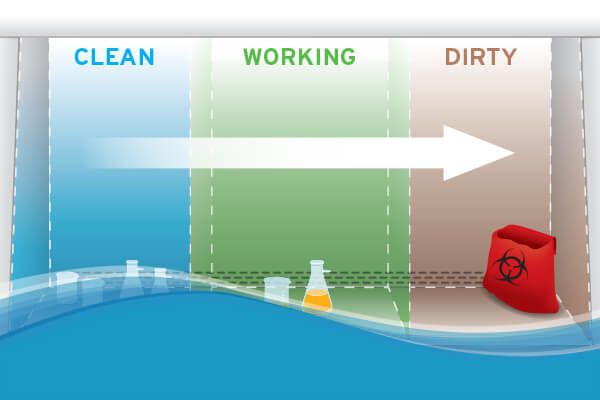
Setting up the Class II Biosafety Cabinet Work Zone for the Biomedical/Microbiological Work
Basic concepts for setting up your Class II Biosafety Cabinet work zone for the Biomedical/Microbiological laboratory before operation begins.
Ebook
Ultralow Freezers Guide
The essential guide to ultralow freezers (ULT) offers lab and operation managers a holistic view of the life of a ULT.
Video
Therapeutics to Combat Aggressive Cancer
Dr. Aleksandra Dukic, postdoctoral researcher, Institute for Cancer Research, Oslo University Hospital, describes a novel target for inhibiting glioblastoma cancer invasion into surrounding brain tissue and the importance of this work in addressing the need for innovative therapeutics to combat this aggressive cancer. Hear how the culture and analysis of glioblastoma patient-derived cells are vital […]
Specification
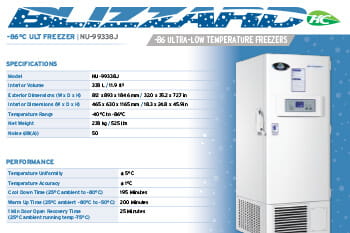
Ultralow Freezer NU-99338J Specification
Explore the NU-99338J Ultralow Freezer's features, including its advanced cooling technology, energy efficiency, and robust storage capacity.
Video
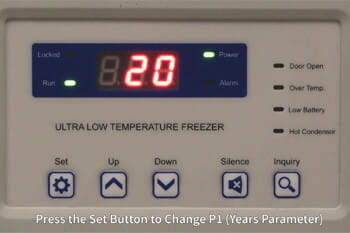
Setting Time and Date Settings on Your Blizzard NU-99100J Ultralow Freezer
Navigate through the date and time settings of your Blizzard NU-99100J Ultralow Temperature Freezer with ease in our step-by-step video tutorial.
Ebook
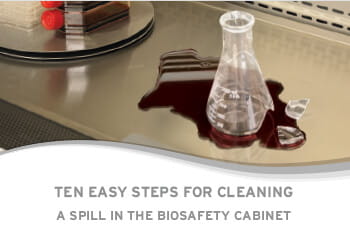
10 Steps to Cleaning a Spill in a Biosafety Cabinet
Discover how to safely handle spills in a Biosafety Cabinet with NuAire's eBook, "Ten Easy Steps for Cleaning a Spill in the Biosafety Cabinet." This guide provides clear instructions on spill management, decontamination, and adherence to laboratory safety standards.
General Technical Bulletin
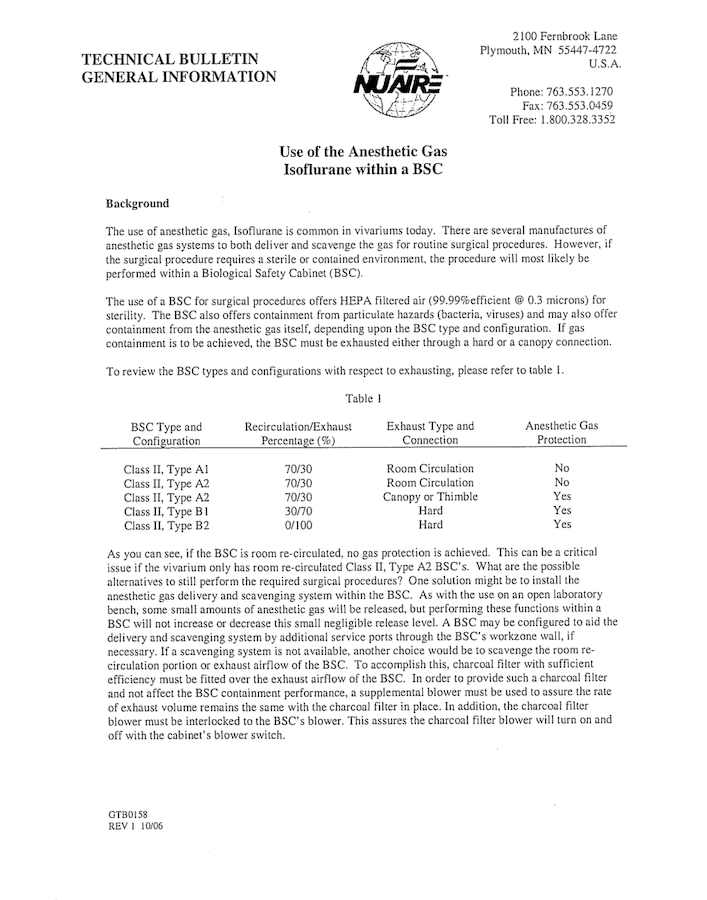
Use of the Anesthetic Gas Isoflurane with a Biosafety Cabinet
The use of anethetic gas, Isoflurane is common in vivariums todya. There are several manufactueres of anesthetic gas systems to both deliver and scavegne the gas for routine surgical procedures. However, if the surgical procedure requires a sterile or contained environment, the procedure will most likley be performanced within a biosafety cabinet (BSC). The use of a BSC for surgical procedures offers HEPA filtered air (99.99% efficient @ 0.3 microns) for sterility. The BSC also offers containment from particulate hazards (bacteria, viruses) and may also offer containment from the anesthic gas itself, depending upon the BSC type and configuration. If gas containment is to be achieved, the BSC must be exhausted either through a hard or canopy connection.
General Technical Bulletin
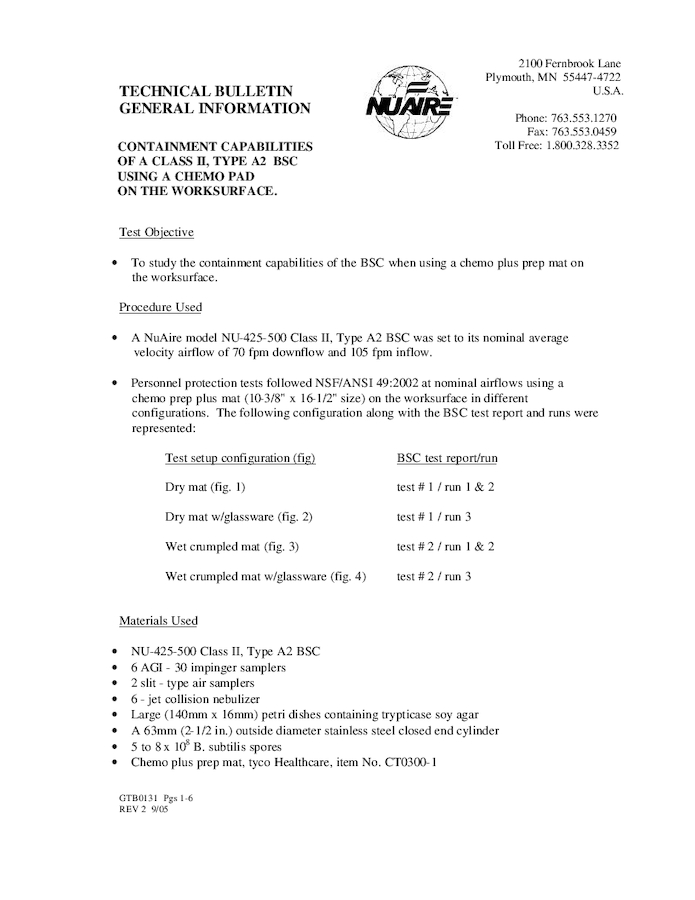
Using a Chemo Pad in a Class II, Type A2 Biosafety Cabinet
The bulleting entitled Chemo Pad Containment Capability of a Biosafety Cabinet offers insight into the performance capabilities of a biosafety cabinet (BSC) using a chemotherapy pad on the work surface.
White Paper
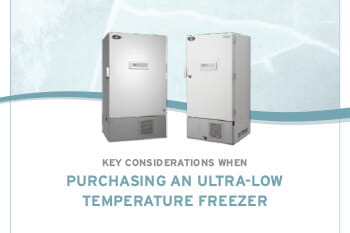
Lab Freezer Buying Guide
Learn what to consider when buying a ULT freezer: capacity, energy efficiency, technology, and maintenance. Make the best choice for your lab’s cryogenic storage needs.
White Paper
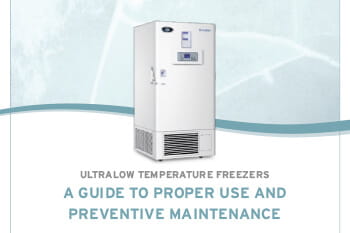
Ultralow Freezer Use and Maintenance
Discover best practices for ULT freezer use, maintenance, and longevity. Protect your samples and extend equipment life with expert guidance in this comprehensive white paper.
Related Products
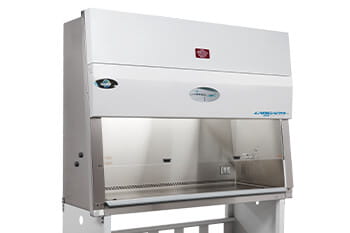
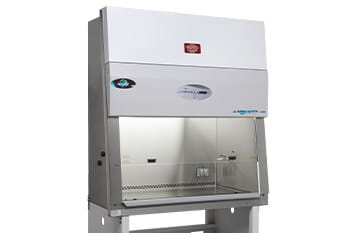
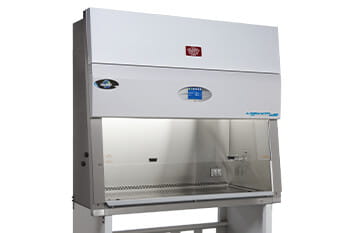
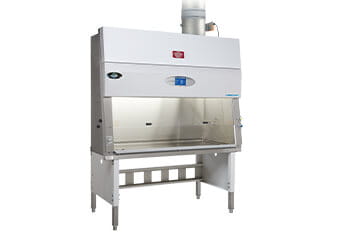
LabGardu00ae ES NU-427 Class II, Type B1 Biosafety Cabinet
LabGardu00ae ES NU-540 Class II, Type A2 Biosafety Cabinet
LabGardu00ae ES AIR NU-543 Class II, Type A2 Biosafety Cabinet
LabGardu00ae ES AIR Limited NU-545 Class II, Type A2 Biosafety Cabinet
LabGard TE (Total Exhaust) NU-560 Class II, Type B2 Biosafety Cabinet